Showing posts with label marketing. Show all posts

Saturday, 26 September 2020

Creativity matters


When I started my business, many moons ago, no one mentioned creativity as a helpful skill to have in the toolbox. 

Most books were about practical things - processes, systems, building a team and of course, working hard. 

That’s what most of us focus on - being diligent, learning from mistakes, getting stuff done. 


But creativity matters. 


Good ideas can be the difference between continued hard slog and genuine step changes in your business. Of course, the ideas need to be implemented but having the inspiration in the first place is the starting point.


Like Archimedes displacing the water in his bath, the ‘Eureka’ moment can be transformational.


There are lots of opportunities to be creative in business. One I would avoid, especially if it involves flouting the rules, is creative accounting. That aside, you can be creative with how you deal with people, creative about how you tackle an operational matter and probably most of all, creative about marketing.


Being creative and implementing your best ideas is what makes your business unique so, in my opinion, its a key skill to have, or to learn in business. 


So how do you ‘learn’ to be creative? 'It’s not my strength', you might say.


I’m not an expert on this but for me its about stepping back from the ‘day to day’ grind and making time to think differently. People get inspired at different times, usually when they ‘switch off’ and let their subconscious brain take over. Maybe on a long walk or drive or for the joggers amongst us, on a long run.


Monty Python star, John Cleese is an unlikely advocate of being creative. His style is to make a specific time to be creative. He finds a place he is comfortable in, where he won’t be interrupted and before he starts he clears away all the mundane things on his list which might impact negatively on the session. He’ll make that phone call, put the bins out, reply to that urgent email etc. Then he’s ready.


He’ll think about the thing he needs to be creative about - the comedy sketch, the problem to solve, whatever it is and work hard on it for an allotted time - maybe 90 minutes or so. The unexpected word in there is ‘hard’. No one expects creativity to be hard work. Aren’t moments of inspiration supposed to just appear, as if by magic, as with Archimedes and of equal fame, with Newton’s apple?


Cleese argues that it can be hard work and needs time and discipline.


He goes further. When he has created his new ‘thing’, he tries a bit harder. He takes the draft and works on it a bit more to get a better result. He cites this extra effort as a reason why he was sometimes more successful that other comics with coming up with truly memorable output.


So it may not be the first thing on the skills list for a budding business owner or entrepreneur but creativity is underrated. 


With time, space and some hard work it can make a big difference to your business.


www.base52.co.uk

Saturday, 1 February 2020

Thinking big, acting small

When we first started our accounting firm we hired a marketing agency.


They were far too expensive and too much of a luxury for our little start up so the relationship only lasted a year or two. We did learn some lessons though. Firstly the importance of having regular and consistent marketing activities and secondly setting ourselves up as being different from our competitors and ‘acting small’.

One example that sticks in my head is our process for answering the phone. If we were in the office, we always answered the phone and if we were free we spoke to the caller, whoever it was. No filtering, no screening - if someone asked for us by name, if we were in and available, we would be happy to take the call.

We’ve grown a bit in the intervening years but our process is pretty much the same, although I confess we do screen out obvious sales calls.

We’ve all been on the other end of more difficult calls, ‘Is he expecting your call?’, ‘Will he know what it’s about?’, ‘I’ll just check for you...no, he’s tied up at the moment I’m afraid, would you like to leave a message?’

Our clunky analogue phone system has just about had its day though.

We’ve expanded a bit recently so the team is spread in different rooms throughout a large building. If someone calls on the main phone we don’t have the wherewithal to transfer them to some of the more remote outreaches of our office. It’s not quite working.

So we think its time for a more modern system with Direct Dial numbers for the various teams and wait for it...an automated switchboard. The challenge is how can we continue to give a courteous and friendly reception to callers whilst making the system practical and effective?

We’ll be working on this. 

I think avoiding too many layers on the call answering options is critical and we definitely don’t want callers to get stuck in a queue listening to something like, ‘Money for nothing’ by Dire Straits for an indeterminate period of time or worse still, giving them a choice of hip hop, pop or chill out music. We want the technology to help not hinder.

So if you call us in a month or two and an automated message says, ‘Press 1 if you are an existing client...’, please don’t hang up. Stick with it and we promise you will very quickly be able to speak to a real person.

It’s progress we think and we will be doing our best to keep acting small and giving you a personalised service.

www.base52.co.uk

Sunday, 26 January 2020

Feast and famine

Accountants are lucky.


Lucky in the sense that a lot of the work we do is ongoing or repeat business. So if we look after our clients and do the right things, our firms should grow in an incremental way as we add new clients.

In other sectors things are less straightforward. A contractor on a 6 month contract needs to find a new customer when the contract ends. The same goes for a builder when they finish the extension they are working on or the freelance designer putting finishing touches to a new company logo.

When the current job stops for these guys, there can be a gap until the next one starts. That’s not a nice place to be. Bills still need to be paid, life needs to go on, but money may be tight.

So what’s the solution? How can the feast and famine cycle be avoided?

It’s a particular challenge for start ups who may not have the profile or recognition to generate a steady flow of new enquiries. 

Let’s start with what won’t work. 

Just waiting passively for the next customer, the next job to arrive, won’t work. 

You need to make your own luck. That means in the fallow periods putting all your energy and focus into finding the next customer. Whatever it takes. Following up old contacts. Networking. Finding your social media channel and using it to engage with potential customers. Email. Direct mail. Cold calling. Measure the results and keep doing what works.

Then you get lucky. You get a good lead. Proposal leads to an order and you are on the way again.

It feels great. This what you love. You get stuck in. 

This time though, you need to try and break the cycle and get your next job lined up before you finish the new one. That means putting some of your time aside every week for marketing (attracting new leads) and selling (doing your pitch and closing the deal). I’d suggest that about 10 to 20% of your time is about right for this so that’s half to one day a week. It could be one set day every week or an hour or so a day. It just needs to get done.

The feast and famine cycle is not a good way to run a business. It needs discipline and focus to break it and have a more regular flow of work.

The ideal is that you choose when to be idle rather than having it imposed upon you. 

When you are on holiday after a good spell of continuous work and your next job or jobs are lined up for when you get back, you will know you are on the right track.

www.base52.co.uk

Monday, 6 January 2020

Who is your ideal customer?

A simple question but one that many small businesses don’t take time to think about and build a strategy around.


Starting a business is tough and there can be a tendency to take on more or less any customers where you can provide them with your product or service and get paid. Being passive about this is probably not a good approach. 

Let’s say you’re a start up freelance designer. You can turn your hand to most types of creative work but what you really enjoy is film, video and animation projects. If you take on ‘any old job’ you will not be playing to your strengths and before too long you could get stuck in a cycle of poorly paid and unrewarding work.

So lets get back to the ideal customer. There are some ‘givens’ - they pay you on time, they recognise the value you provide and don’t squeeze you too much on price, they share your core values and ethical code, they are easy to deal with.

More than this we need to paint a mental picture of who they are. Are they members of the public or working in a business? If in a business what position do they hold? What age and gender are they? Where do they hang out? What social media platforms do they use? What do they read? What do they do in their leisure time?

Knowing what kind of customer you are looking for should drive your marketing strategy. How will you get in front of these people, build a relationship and sell to them?

For our designer, if his ideal customers are small media or publishing companies, he needs to find and engage with the executives who manage the budgets for the kind of work he delivers. That is quite a specialised and small pond and he needs to give some thought to how to reach these people. A blanket Facebook or Instagram campaign is unlikely to achieve stellar results. Targeted networking or attending industry events and conferences might be a more fruitful approach.

One way of putting it would be, ‘We get the customers we deserve’. We need to be on the front foot with this. Be clear about the business we are in and the customers we want to work with...then go find them.

www.base52.co.uk

Wednesday, 20 March 2019

A hotel with a difference

It's good to be different in business.


Marketeers call it having a ‘Unique Selling Proposition’ or USP. It’s what differentiates you from your competitors and gives your customers a reason to buy from you rather than them.

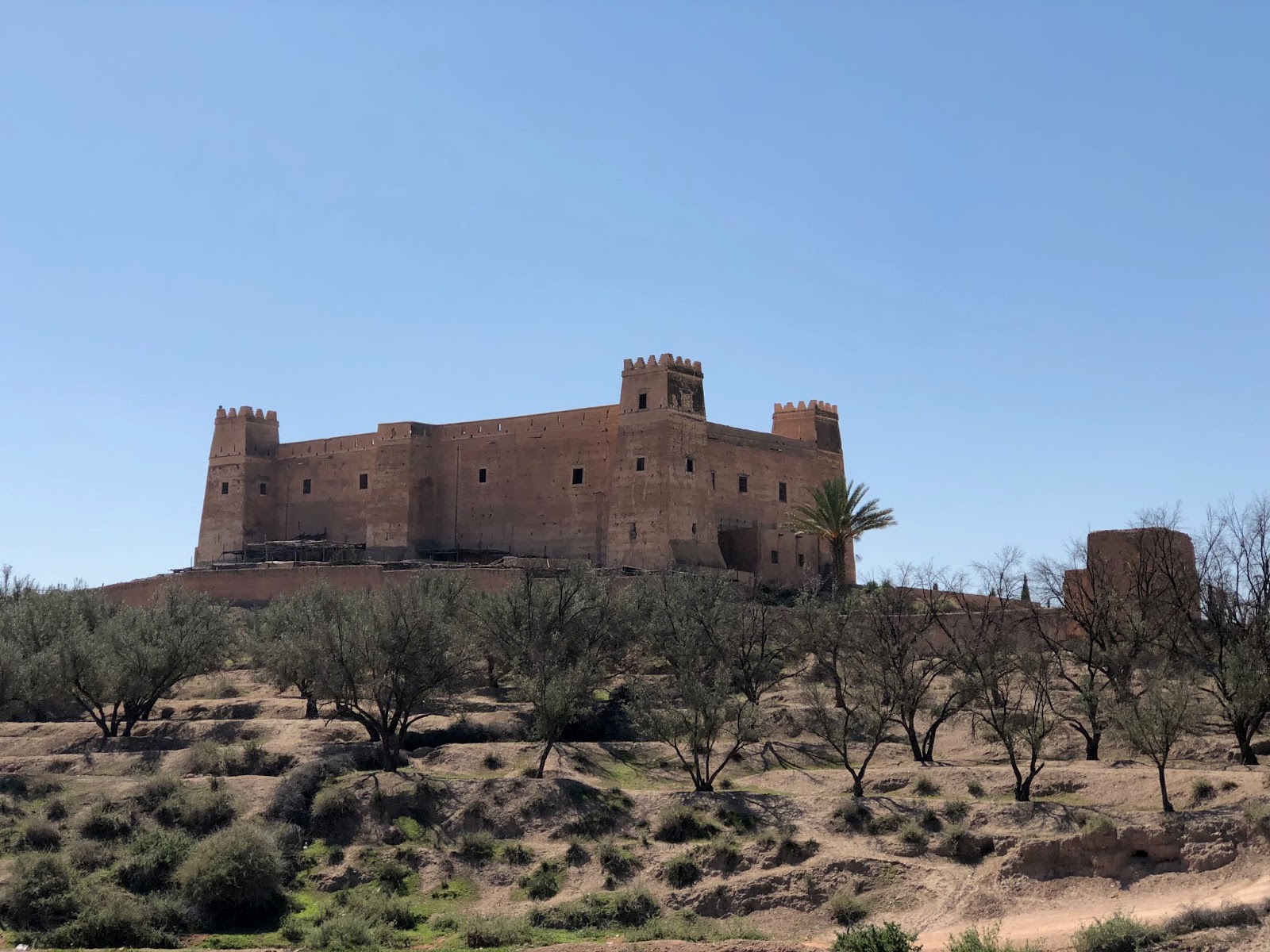
On a trip to Morocco with my wife we booked to stay in a Riad close to the Atlas Mountains, a little over 20km outside of Marrakesh.

We arranged to stay for a few days as a change from the hustle and bustle of the city and maybe to do a little walking. The reviews were good so we settled on Riad Sougtani.

What we stumbled upon was something very different from a typical hotel.

It is run today by the nephews of one of the descendants of Caid Omar who completed the construction of the Riad and an adjacent Great Kasbah in the 19th Century. The brothers inherited the Riad in a run down state and have painstakingly restored it to its former glory.

Their ethos has been to recreate the welcome and sanctuary the Riad used to provide for their forefathers and their special guests who used to stay there. A beautiful central courtyard is fully enclosed by high walls and 6 self contained apartments. Guests and their families used to stay in their own accommodation and gather together for meal times and to discuss family business.

The atmosphere is less of a hotel and more akin to staying as a guest with welcoming and attentive hosts. There are no set meal times. You just turn up when hungry or pre-book if you choose to. There is no menu, but for breakfast and dinner an array of simple Moroccan food is served. Trips can be arranged to the mountains, back to Marrakesh or further afield. For the less active, lazing around the Riad is not a bad option.

The brothers could have chosen to make the Riad into just another hotel, with smaller rooms, a varied food menu, maybe a spa, lots of extras.

In choosing their USP they may be less wealthy than if they had chosen a more conventional format.

They are however generating enough income to keep their beloved Riad well maintained and  through their guests their illustrious family history lives on.

That is a rewarding and distinctive legacy to keep going and more satisfying I suspect than the pursuit of ever increasing profits.

Being different isn't just about making more money.

www.base52.co.uk

Wednesday, 1 August 2018

A perfect pipeline

I'm not a marketeer but like all business owners who want to grow their business, I do marketing.


The nirvana we search for is a perfect pipeline. A method or methods of marketing which delivers a steady stream of leads, where we know the cost per lead and we know the liklihood of converting each lead or enquiry into a new customer.

If the cost for each converted lead is justified based on the price of your product or service then, Bingo! That's it! Growth plan sorted.

But its not normally that straightforward.

What I've found over the years is that something works for a while - a networking group, google adwords, telesales, a referral scheme...and then it stops. Sometimes this is an abrupt or sudden change. Your brilliant telesales person moves on, Google changes their algorithm, more competition - something happens to make your trusty lead generation star less effective.

Of course when this happens we try and change things. Find out why it has stopped working so well and try and fix the problem. But often tinkering doesn't work. The moment has passed.

So it's back to the drawing board again

I'm in that happy phase now where I've stumbled upon a lead generation method which has exceeded my expectations and is delivering impressive stats

So I'll be enjoying this while I can. I fully expect that just around the corner there will be a glitch. We will tinker and tweak but it may not be the same again

And then the search starts again for the next big thing...

www.base52.co.uk